Shed and Playhouse Removal in Boise: Move It or Tear It Down?
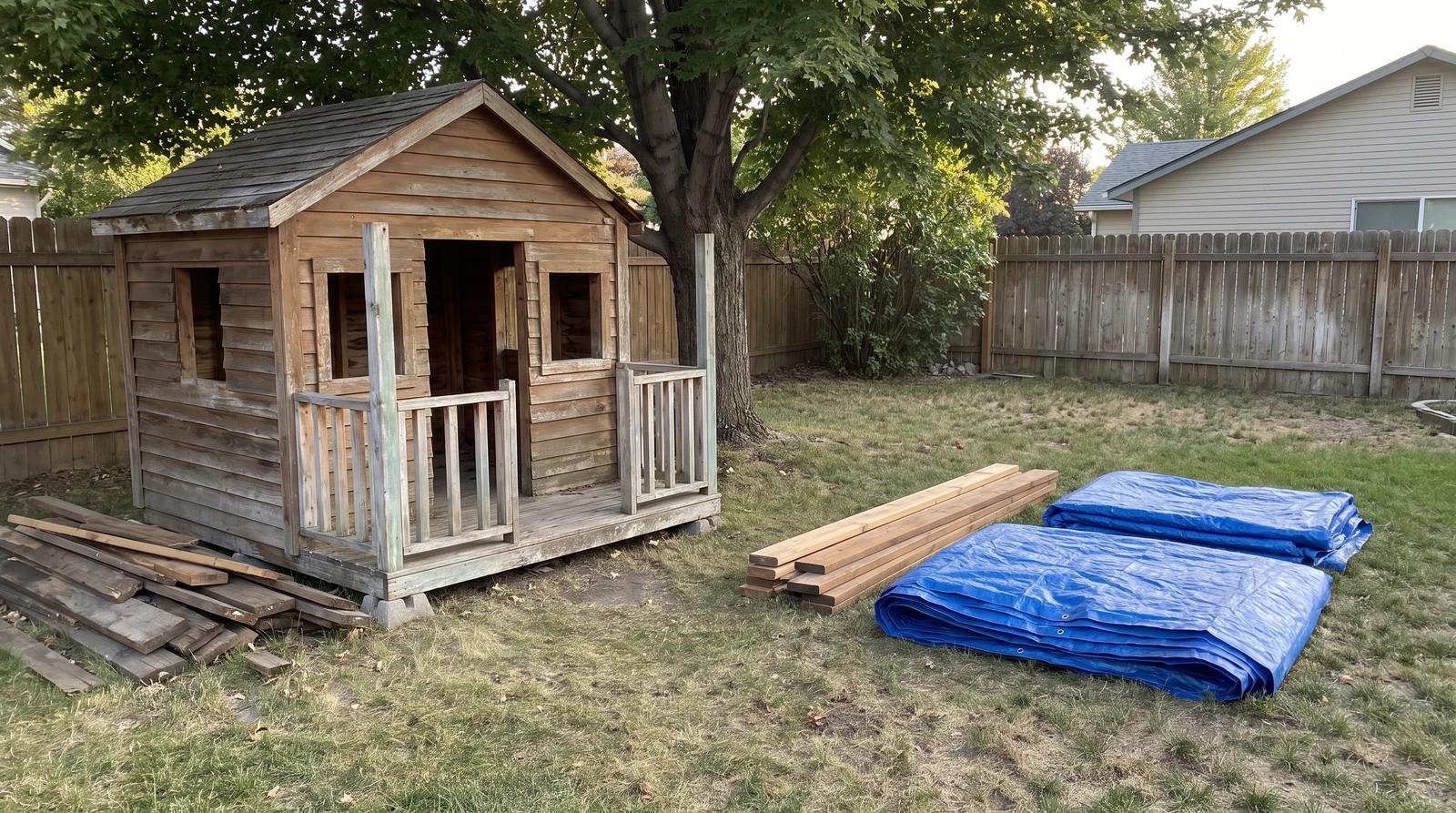
Last spring we stood in a Meridian backyard with a mom who'd posted her kids' old playhouse online for free. She got eleven replies in a day and nobody who could actually move it, so it went on the same estimate as the shed we'd come out to look at. Most of our weeks are shed removal in Boise and around the valley, but playhouses end up on that list more often than you'd think.
That's pretty typical. When the kids outgrow it, the first thought is that somebody else will want it.
Sometimes that works out. A lot of the time it doesn't. So before you spend three weekends answering messages, here's how to tell whether yours should be moved, given away or taken down.
Can a playhouse actually be moved?
Some can. Plenty can't.
The ones that move well are small, built on skids or a simple frame, and still solid. If you can see the bottom edge and it's sitting on blocks or runners instead of buried posts, that's a good sign.
The ones that don't move are the ones people fall in love with. Built on site by a grandpa in 2009, nailed to four posts set in concrete, with a little porch, a shingled roof and a window box.
Those were built to stay put. Moving one means cutting it loose, and it usually racks or cracks along the way.
Then there's getting it out of the yard. Is there a gate wide enough? Most backyard gates in the North End and the older parts of Garden City aren't.
Add a fence, a few sprinkler heads, a tree in the way and a narrow side yard. Suddenly the playhouse that looked portable is a puzzle with no answer.
Tip: Before you list a playhouse for free, measure your narrowest gate and the playhouse's narrowest side, and put both numbers in the post. You'll skip a lot of wasted trips from people who show up with a small trailer and a hopeful attitude.
When giving it away makes sense
If it's on skids, in decent shape and narrower than your gate, absolutely try to give it away. We'd honestly rather see a good playhouse end up in another family's yard in Kuna than take it apart.
Just be realistic about who's doing the work. Whoever picks it up usually needs a few friends, some straps, a dolly or two and an actual plan. If they leave a rut across your lawn or snap a fence board on the way out, that's still your fence.
Give it two weeks. If nobody's committed by then, it probably isn't going to happen.
DIY teardown or a Boise shed removal crew?
This is usually when people ask if they can just knock it down themselves. Sure, a lot of you can. A playhouse is smaller than most sheds, and a weekend with a pry bar and a reciprocating saw will get it on the ground.
What people underestimate is what's left afterward. A wood playhouse turns into a surprisingly big pile of splintered siding, roofing, nail-studded framing and maybe a cracked plastic slide.
It won't fit in your trash can, and it won't all fit in the back of a car either. Somebody still has to load it and haul it to the Ada County landfill or a transfer station, and that's rarely one trip.
Posts set in concrete are the other surprise. Pulling those by hand is slow, sweaty work, especially in August when the ground in Nampa and Caldwell is baked hard. In January you're fighting frozen dirt instead.
One more thing to check before you start swinging. Did anyone ever run power out there for a light or a fan? If there's wiring, it has to be safely disconnected at the source first.
A small backyard playhouse usually isn't a permit question. But if it has electrical, or it's big enough to count as a real accessory building, a quick call to your city before you start is worth it.
How our shed and playhouse removal works in Boise
Yes, we'd love the job. But here's what it actually involves, so you can compare it to doing it yourself.
We come out and look at the playhouse, the posts, the gate and the path to the street. Then you get a firm price before anything gets touched, based on the size of the structure and how much work it takes to get it out. No hidden fees, and cash, card or Venmo all work.
Most playhouses come down and get hauled off in a single visit. We can usually schedule it within a few days of the estimate, and same day when the calendar allows.
We take it apart in pieces so it fits through your gate, then pull the posts. After that we rake up the nails and splinters, so nobody steps on one barefoot next summer.
Anything still usable gets set aside. Clean lumber, hardware and plastic play parts get donated or recycled when they can be, and only what's left goes to the landfill.
We've done these in Eagle backyards with brand-new sod and in older yards on the Bench where the playhouse was half buried in lilacs. Same approach every time. Protect the yard, take it down carefully, leave the spot clean.
The bottom line
If your playhouse is small, sits on skids and fits through the gate, try giving it away first. If it's built in, sitting on concrete posts or falling apart, tearing it down is the realistic answer, and most of the real work is the cleanup and the haul.
Not sure which kind you've got? Give us a call at (208) 279-2738. We'll come take a look, tell you straight whether it's worth moving, and give you a firm price if you'd rather we handle it.
Want a Free Quote?
We'll come look at your shed and give you a firm price. No pressure, no obligation. Then you can decide if DIY or professional makes more sense for your situation.
Call (208) 279-2738 for Free EstimateServing Boise, Meridian, Nampa, Caldwell, Eagle, and surrounding areas
More From Our Blog
Treehouse and Shed Removal in Boise: How We Save the Tree
Taking down an old treehouse in Boise? Here's how our shed removal crew gets it down board by board without damaging the tree it's been bolted to for years.
Metal Shed Removal in Boise: Taking Down an Old Steel Shed
Thinking about metal shed removal in Boise? Here's what taking down a rusted steel shed really involves, what we recycle, and when to call a crew.
Shed Concrete Slab Removal in Boise: Keep It or Break It Out?
Taking out an old shed in Boise and wondering about the concrete slab left behind? Here's when to keep it, when to break it out, and what the work involves.
