Old Shed Removal in Boise: Dealing With Mice, Wasps and Snakes
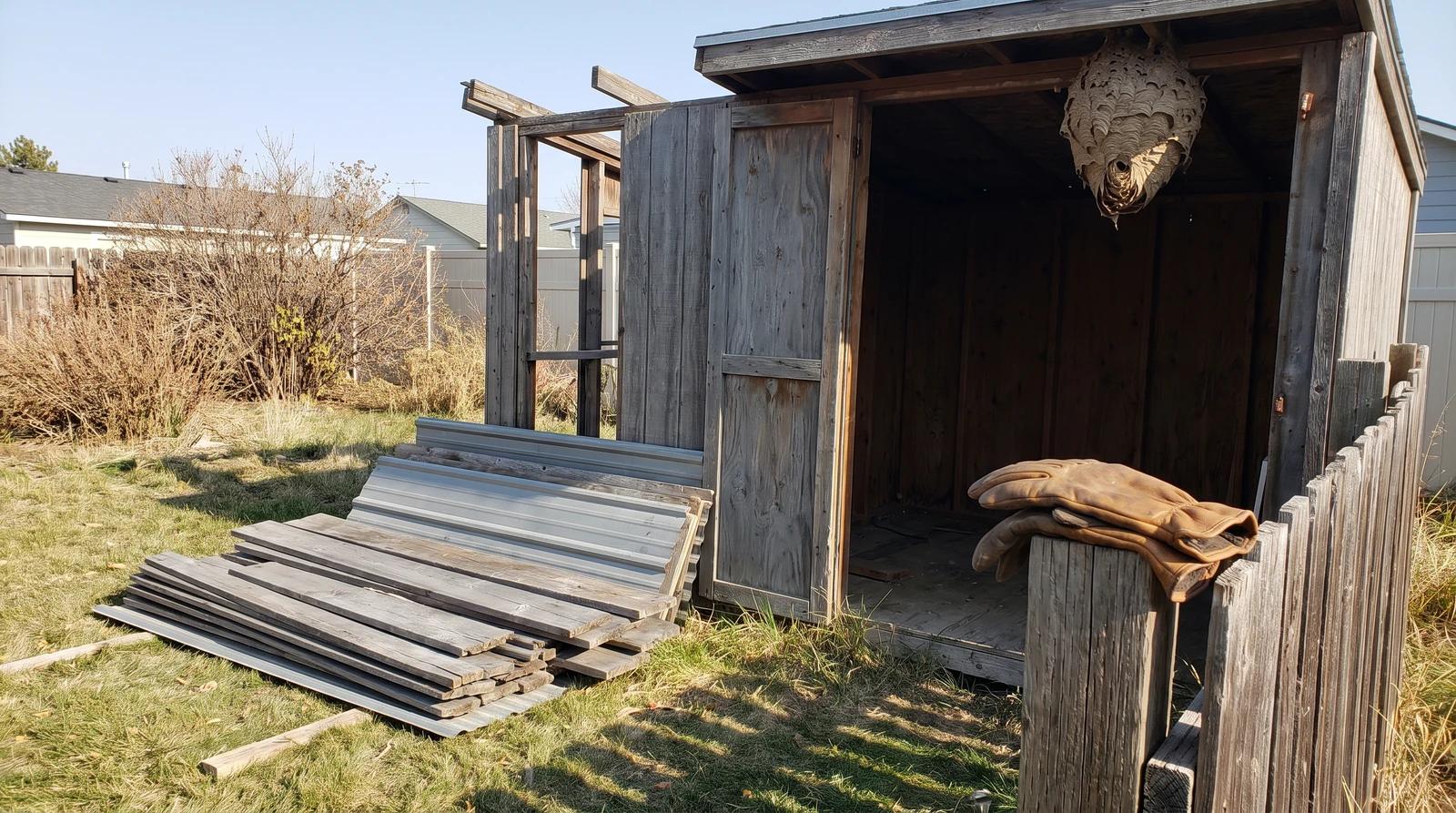
You finally open the shed door for the first time since last fall. Something scurries behind the lawn mower, and a wasp drifts down out of the rafters. If you're planning shed removal in Boise, that's a pretty normal way for it to start.
An old shed is shelter, plain and simple. Once people stop going in there, plenty of critters around the Treasure Valley move in. It helps to know what you might find, and how to handle it, before the walls come down.
What's usually living in an old shed
Mice almost always get there first. Deer mice and house mice love a shed with bags of seed, old cardboard boxes or a stack of patio cushions. Look for droppings along the walls and shredded nesting material in the corners.
Wasps and yellow jackets come next. Paper wasps build under the eaves and up in the rafters. Yellow jackets sometimes nest inside a wall cavity, or in the ground right next to the foundation.
Then there are spiders. Black widows are common across the valley, and a dark, cluttered shed is exactly where they like to be. Check under shelves, in the gap where the floor meets the wall, and inside old flower pots before you reach in bare-handed.
Some lots get bigger guests. Skunks, raccoons and feral cats like the space under a shed floor that sits on blocks or skids.
And if you live near the foothills, say the upper North End, Harris Ranch, or the edges of Eagle and Emmett, snakes are a real possibility. Most are harmless gopher snakes. Rattlesnakes do turn up near the foothills, though, so give any snake plenty of room.
Mouse droppings are the part people skip
This is the step most people rush, and it's the one that matters most.
Deer mice can carry hantavirus. People catch it by breathing in dust from dried droppings, urine or nesting material. That's why you don't sweep or vacuum mouse mess dry. Sweeping throws it into the air right where you're breathing.
The public health advice here is simple. Open the door and let the shed air out for a while before you start, and wear gloves.
Then spray the droppings and nests with a household disinfectant or a bleach-and-water mix until they're soaked. Let it sit, wipe it up with paper towels, and bag it.
Tip: If you're clearing out your own stuff before removal day, wet down the droppings before you move a single box. Lifting a box stirs up whatever's underneath it, and a soaked floor keeps that dust out of the air.
Whoever ends up taking the shed down, this step is worth doing right.
Wasps and the best time of year for shed removal in Boise
Wasp nests grow all summer. By late summer, yellow jackets are at their busiest and most defensive, which happens to be right when a lot of folks in Meridian, Kuna and Nampa start thinking about clearing out the backyard.
Cold weather helps a lot. Once our freezing nights settle in, most of the colony dies off and the old nest sits empty. So a shed demolition in the colder months usually means a lot less to worry about from wasps.
Stuck on a summer timeline? Walk around the shed on a warm afternoon and just watch for a few minutes. Wasps flying in and out of one spot means there's a nest.
Mention it to whoever's doing the work before they show up. A nest that gets handled first beats one found halfway through pulling off the siding.
What's hiding under the floor
A lot of older sheds around Boise sit on wood skids or concrete blocks with a gap underneath. That gap is a den waiting to happen.
Before removal, look for dug-out holes along the edges, fresh dirt pushed out from underneath, or a strong skunk smell. If something's living down there, you want it gone before the floor comes up. A cornered skunk or raccoon isn't fun for anybody.
The gentle approach is to make the spot less comfortable for a few days. Clear the brush and clutter around the base, leave a light on nearby, and many animals will move on by themselves.
If an animal won't leave, or it seems hurt, call a wildlife control service. That's their job, and a shovel isn't the right tool for it.
A note on bird nests
Birds like shed rafters too. Many native birds are protected under federal law, so an active nest with eggs or chicks in it can't just be torn out.
Common invasive birds like house sparrows and starlings aren't covered. If you find a nest in spring or early summer and you're not sure what it is, waiting until the young have flown is usually the simplest answer.
Getting ready for shed removal in Boise
Give the shed a good look before anyone comes out. Make a note of wasp traffic, droppings, burrows and nests.
Then tell your crew what you found. A crew would much rather hear about a yellow jacket nest in the back wall during the estimate than find it on removal day.
It won't scare a crew off. It just changes how the job gets set up, and it means the price you're quoted can account for it.
If you'd like a second set of eyes on whatever's moved into yours, give us a call at (208) 279-2738. We'll come take a look and give you a firm price before anything gets touched.
Want a Free Quote?
We'll come look at your shed and give you a firm price. No pressure, no obligation. Then you can decide if DIY or professional makes more sense for your situation.
Call (208) 279-2738 for Free EstimateServing Boise, Meridian, Nampa, Caldwell, Eagle, and surrounding areas
More From Our Blog
Shed Removal in Boise: What a Playhouse Removal Leaves Behind
Taking out a playhouse or treehouse in Boise? Here's what's left after shed removal: footings, anchors, gravel, nails and bare dirt, and how to plan for it.
Shed Demolition in Boise: Removing a Shed With Power Run to It
Planning shed removal in Boise and the shed has lights or outlets? Here's who handles the wiring, why it comes first, and how it changes timing.
Wood Shed Teardown in Boise: How Long Shed Removal Takes
How long does a wood shed teardown in Boise take? What adds time, how soon we can start, how weather plays in, and what your yard looks like when we're done.
