Shed Demolition in Boise: Removing a Shed With Power Run to It
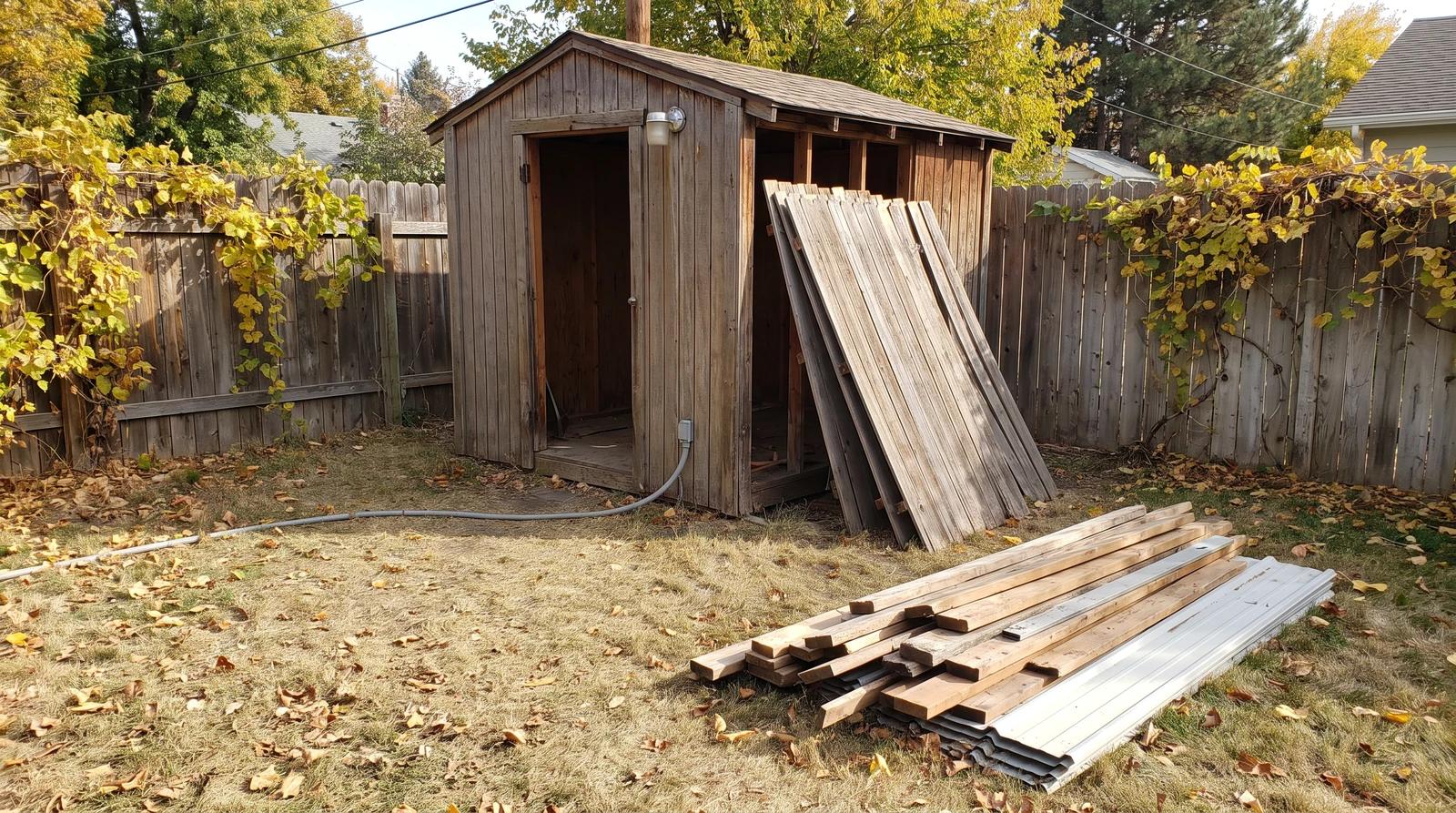
Somebody before you ran power out to the backyard shed. There's a light on a pull chain, maybe an outlet or two, and a gray conduit that disappears into the lawn. Now you want it gone, and shed removal in Boise suddenly comes with a question: what happens to that wire?
Here's the short answer. The shed itself isn't any harder to take down because it has power. The wire just has to be dealt with before anyone picks up a pry bar.
Below is what that step involves, who should handle it, and what it does to your schedule.
Why the wiring comes first in any shed demolition in Boise
Taking a shed apart is messy work. Walls get pulled, the roof comes down in sections, and the floor gets broken up.
A live wire anywhere in that pile is a real hazard to whoever's swinging the hammer.
So can't you just flip the breaker? Not really. Breakers get mislabeled, and somebody in the house might flip it back on to figure out why the garage outlets quit.
Shed circuits also get tapped off other circuits that nobody wrote down. What you want is the circuit dead and disconnected at the source, not just switched off.
Yes, we'd love to take your shed down. But honestly, this part belongs to a licensed electrician, not a demolition crew.
What the electrician actually does
It's usually a smaller job than people expect. The electrician figures out which circuit feeds the shed, shuts it off, and disconnects it at the panel or wherever the feed starts.
On the house end, the wire gets terminated properly. That might mean a covered junction box, or pulling the run back completely.
On the shed end, it's cut and capped so nothing's left hanging. If the line is buried, they'll tell you whether it can stay in the ground dead or should come out.
Electrical work in Idaho generally needs a permit, and who issues it depends on your address. Boise, Meridian, Nampa and Caldwell run their own building departments.
Other areas, including parts of unincorporated Ada and Canyon County, may go through the state instead. A local electrician will know which office covers you.
Tip: Before you call anyone, find where the wire leaves the house. Look for conduit coming out low on the siding, an outdoor box near the panel, or a line along the fence. Snap a photo of it and your breaker panel, and both the electrician and the shed crew will thank you.
Buried lines, slabs and the stuff you can't see
Plenty of sheds on older lots, in the North End or up on the Bench, got wired years ago. Sometimes by a homeowner, sometimes without a permit.
That wire might be in conduit at a sensible depth. Or it might be cable laid in a shallow trench.
Why does that matter? Because digging changes things. Pulling a shed off a gravel pad or skids doesn't usually disturb anything underground, but breaking out a slab, pulling posts or regrading for lawn can.
If there's going to be digging, call 811 first. It's free, and it gets utility lines marked.
There's a catch, though. 811 marks the utility-owned lines coming to your house, not private lines you or a past owner put in. Your shed feed is private, so ask the electrician where it runs.
Shed power that went in with a permit is more likely to have a documented, sensible run. That can make things tidier. It still doesn't skip the disconnect.
What else tends to live in a powered shed
A shed with electricity usually got used more. That means workbenches, shelving, power tools, maybe an old fridge or freezer, a space heater, or a window AC unit for the summer heat.
Anything with refrigerant has to be disposed of correctly, so mention it when you set up an estimate.
Paint, solvents, fuel and fertilizer are their own category. They shouldn't ride along in a regular load to the Ada County landfill, and the county has separate household hazardous waste drop-off for them.
Canyon County runs its own sites with their own hours. If you're in Nampa, Caldwell or Middleton, check before you load up.
The light fixture, outlet boxes and a short tail of capped wire come out with the walls like any other debris. A lot of what a shed's made of gets recycled or donated, especially metal and any lumber still in decent shape.
What power does to shed removal timing and cost in Boise
The electrical step adds one more appointment to line up. If a permit or inspection is needed, that's part of it too.
How long that takes depends on the electrician's calendar and your city's permit process. Not on the shed.
On our end, pricing is based on the space and the work involved. Size, what it's built from, what's inside, how easy it is to reach and whether there's a slab to break out are what move the number.
The wiring itself is the electrician's job, not ours. The disconnect just has to happen before we start.
The order that works best is simple. Get the electrician scheduled. Have us out for the free on-site estimate whenever it suits you, since we can look at the shed with the power still on. Then book the teardown for after the wire's been made safe.
Start with the wire, then the walls
If power runs to your shed, plan on a licensed electrician disconnecting it first, and find out whether your city wants a permit for that. Once it's handled, the teardown is the same job as any other shed.
When you're ready to have someone take a look, give Boise Shed Removal a call at (208) 279-2738. We'll come out, give you a firm price before anything's touched, and we cover Boise and the rest of the Treasure Valley.
Want a Free Quote?
We'll come look at your shed and give you a firm price. No pressure, no obligation. Then you can decide if DIY or professional makes more sense for your situation.
Call (208) 279-2738 for Free EstimateServing Boise, Meridian, Nampa, Caldwell, Eagle, and surrounding areas
More From Our Blog
Wood Shed Teardown in Boise: How Long Shed Removal Takes
How long does a wood shed teardown in Boise take? What adds time, how soon we can start, how weather plays in, and what your yard looks like when we're done.
Shed Demolition in Boise: Is Fall the Best Time for Removal?
Thinking about shed removal in Boise? Here's how fall, winter and spring change shed demolition across the Treasure Valley, and when it makes the most sense.
Shed Demolition and Removal in Boise: Do You Need a Permit?
Planning shed demolition in Boise? Here's when a permit matters, what to check about power and utilities, and how Treasure Valley cities handle it.
