What Happens to Your Old Shed After Removal?
Your shed gets torn down, loaded into a truck, and driven away. Then what?
Most people don't think about where their old shed ends up. But if you care about responsible disposal and keeping stuff out of landfills, it's worth knowing.
Here's what actually happens to shed materials after removal in Boise.
It Starts with Sorting During Demo
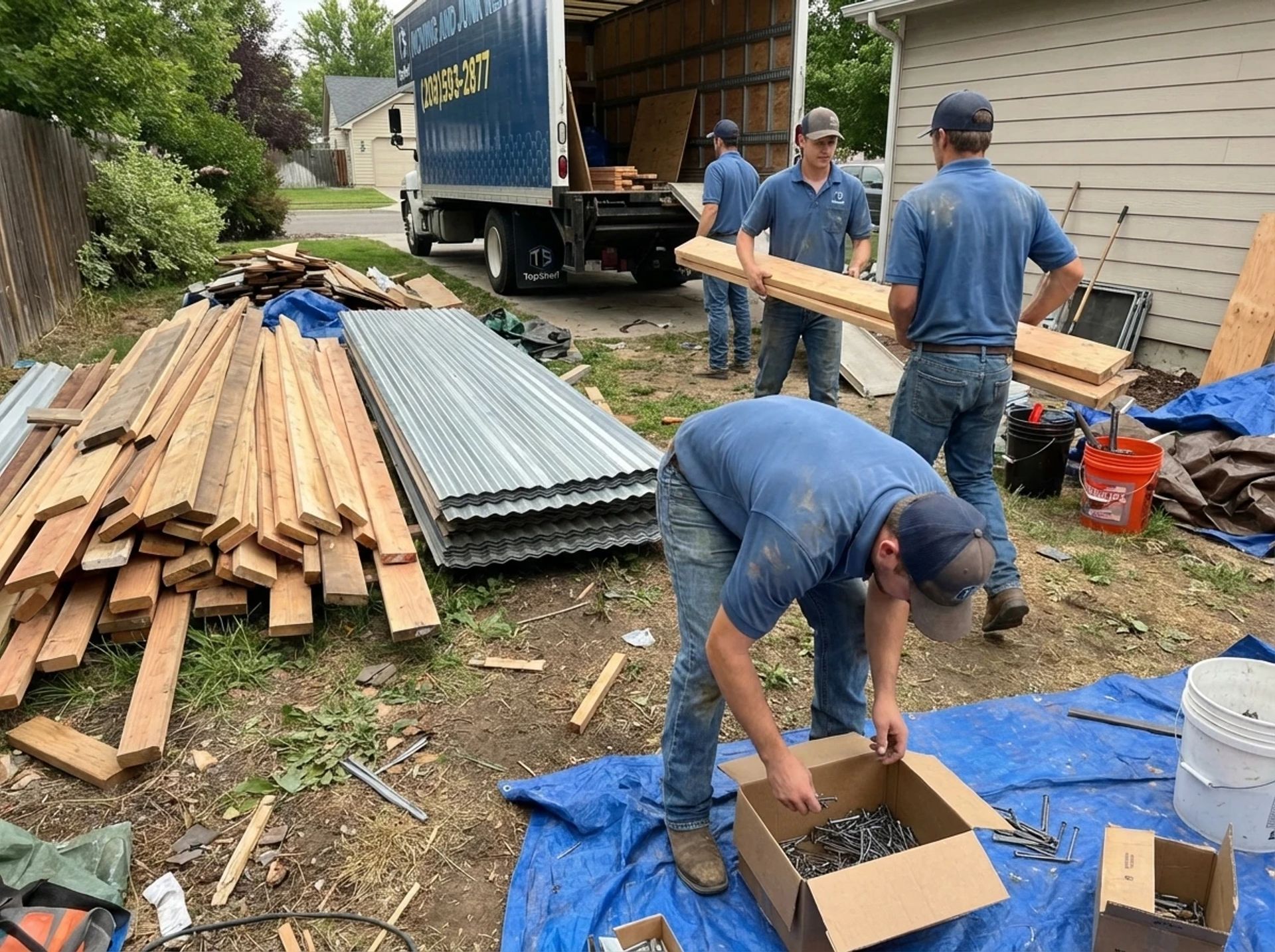
Good removal companies don't just smash everything together. They separate materials as they work.
Metal gets separated
Roofing, siding, brackets, screws, nails—all metal goes in one pile. This stuff has value at scrap yards.
Wood gets separated
Untreated lumber, plywood, and dimensional lumber go separately. Clean wood can be recycled or repurposed.
Concrete and masonry
Foundation blocks, concrete pads, and cinder blocks get their own category for specialized disposal.
Everything else
Roofing shingles, treated lumber, composite materials—this is the stuff that usually heads to the landfill.
Sorting on-site is more work, but it means more materials get recycled instead of dumped.
Metal Gets Recycled
Metal from shed demolition is highly recyclable. Steel roofing, aluminum siding, copper wiring—all of it can be processed and reused.
In Boise, responsible removal companies take metal to local scrap yards. The metal gets sorted by type, processed, and sold to manufacturers who melt it down for new products.
Why this matters: Recycling metal uses 95% less energy than producing new metal from ore. Your old shed's metal likely becomes part of new construction, appliances, or vehicles.
Some removal companies actually make a little money back on scrap metal, which can help keep their prices lower. Win-win.
Wood Has Different Fates
What happens to shed wood depends on what type it is and its condition.
Clean, untreated lumber
Gets taken to wood recycling facilities. It's chipped for mulch, used for biomass fuel, or processed into engineered wood products like particleboard.
Painted but not treated wood
Can still be recycled in most cases. Paint doesn't prevent wood from being chipped and repurposed.
Pressure-treated or chemically-treated lumber
Goes to the landfill. Treated wood contains chemicals that make it unsafe for recycling. This includes most deck boards and ground-contact lumber.
Rotted or damaged wood
Usually landfilled. If it's structurally compromised, recycling facilities often won't accept it.
In the Treasure Valley, wood recycling facilities exist, but not every removal company uses them. Ask if you care about keeping wood out of landfills.
Concrete and Masonry Get Crushed
If your shed had a concrete foundation, that material doesn't go to a regular dump.
Concrete is taken to recycling facilities where it's crushed into gravel-sized aggregate. This recycled concrete gets used for:
- •Road base and fill material
- •New concrete mix (replaces some virgin aggregate)
- •Landscaping and drainage projects
- •Erosion control
Concrete recycling is standard practice in Idaho. It's cheaper for companies than landfilling it, and it's better for the environment.
What Actually Goes to the Landfill
Not everything can be recycled. These materials typically end up at Ada County Landfill or other authorized disposal sites:
The goal for responsible companies is to recycle what they can and landfill what they must. Typically, 40-60% of a shed's materials can be diverted from landfills.
That's better than the alternative—illegal dumping or taking everything to the landfill without sorting.
How to Choose a Responsible Removal Company
Not all companies handle disposal the same way. If you care about where your shed ends up, ask these questions:
Cheap isn't always better. Companies that recycle properly might charge slightly more, but they're not cutting corners on disposal.
The Bottom Line
Your old shed doesn't have to end up as pure waste. Good removal companies recycle metal, wood, and concrete whenever possible.
Some materials still go to landfills—that's unavoidable with current recycling technology. But responsible disposal means sorting materials and using proper facilities.
If this matters to you, ask your removal company about their disposal practices before hiring them. Companies that care about responsible disposal will have clear answers.
Eco-Friendly Shed Removal in Boise
We separate materials for recycling and use licensed disposal facilities throughout the Treasure Valley.
Call (208) 279-2738